How 3D Printing Is Changing the Future of Lighting
From mass production to flexible, circular lighting solutions
The lighting industry is facing a new challenge.
Buildings are becoming smarter, technology is evolving faster, and the demand for flexible solutions is growing. Yet many lighting products are still manufactured according to a traditional model: large production volumes, fixed designs and limited room for adaptation.
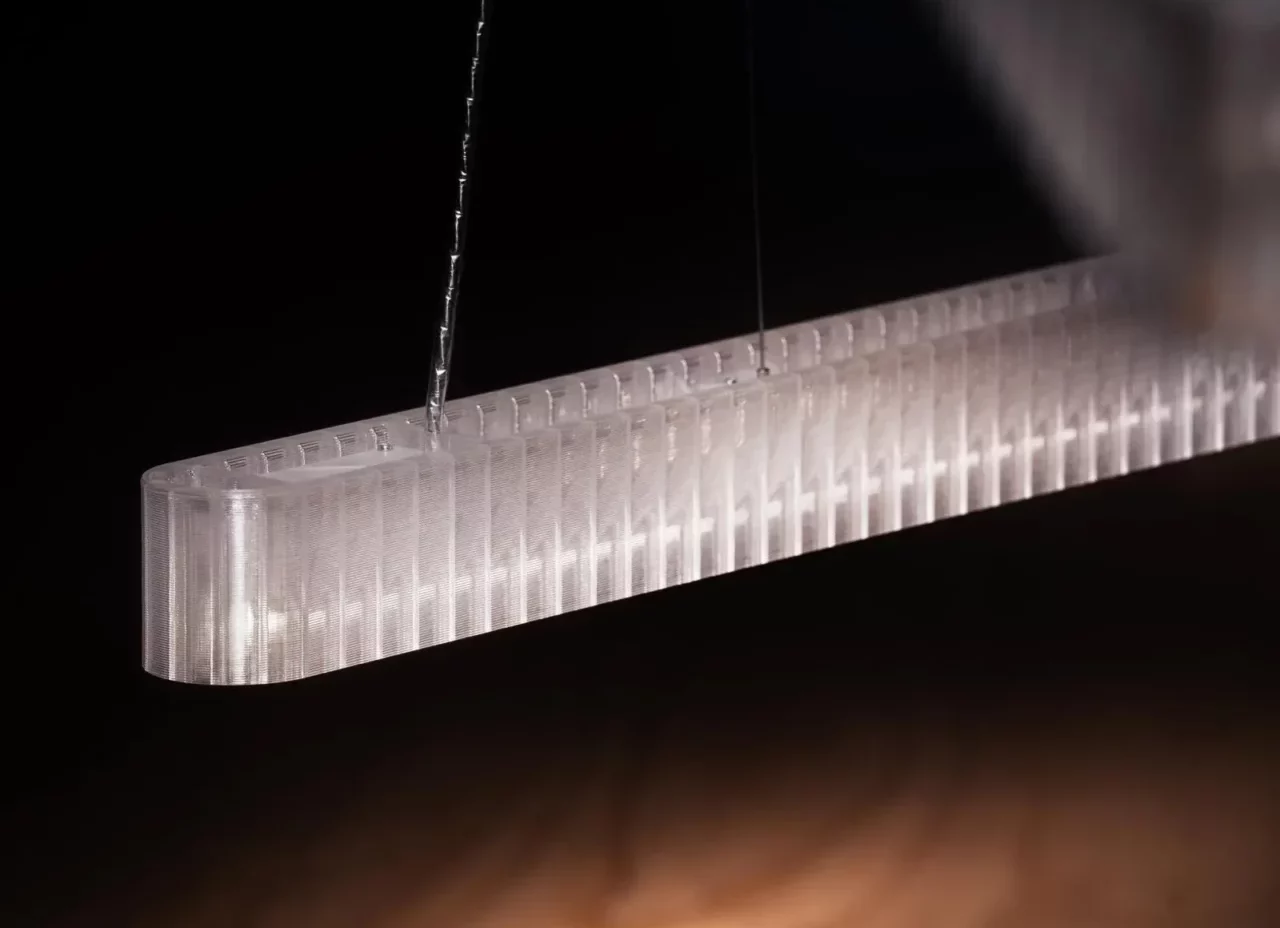
3D printing in lighting shows that there is another way. With additive manufacturing, luminaires and components can be designed and produced faster, with more opportunities for customisation and more efficient use of materials.
It is not just a new manufacturing technique. It is a different way of thinking about lighting.
What is 3D printing in lighting?
3D printing in lighting is a manufacturing process in which luminaires and lighting components are built layer by layer from a digital design.
Unlike traditional manufacturing, 3D printing does not require a new mould for every design variation. This makes it easier to produce customised shapes, smaller production runs and products on demand.
The result is greater design freedom, flexibility and opportunities for custom lighting solutions.
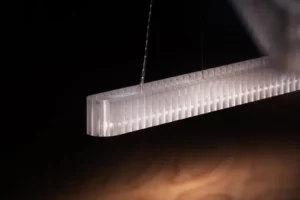
Greater design freedom for architecture and buildings
Every space has its own character. An office, hotel, retail space or public environment requires a different lighting solution. Yet many luminaires are still based on standard formats.
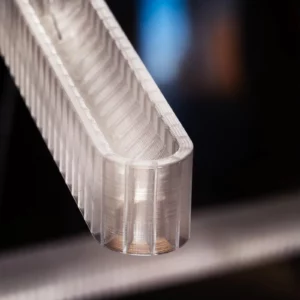
3D printing creates more room for customisation. Through parametric design, dimensions and shapes can be digitally adapted without rebuilding the entire production process. Organic forms, different textures and colours also become easier to achieve.
This allows lighting to better complement the architecture, function and identity of a building.
Less stock, more flexibility
One of the major advantages of 3D printing is on-demand production. Products can be stored digitally and manufactured when they are needed. This reduces the need for large inventories and helps prevent overproduction.
Signify myCreation and IQ LUX are two examples of how 3D printing is moving beyond prototyping and into real-world lighting production. IQ LUX is developing an automated and scalable production concept designed to shorten development cycles and align production more closely with demand.
Combined with local production, on-demand manufacturing can also help reduce transport and logistics movements.
3D printing as a driver for circular lighting
Sustainability is not only about how much energy a luminaire uses during its lifetime. Material use, production, maintenance and end-of-life also matter.
3D printing creates opportunities to design and manufacture lighting more circularly. Products can be designed to be modular and easier to disassemble, allowing components to be replaced, repaired or upgraded. Materials can then be reintroduced into the production cycle.
A circular approach can be summarised in three principles:
Use Less: use less material and fewer virgin resources.
Use Longer: maintain, repair and upgrade products so they last longer.
Use Again: reuse components and materials at the end of their lifetime.
Material choice also matters. Signify myCreation uses at least 65% recycled or biocircular material in its 3D-printed components. IQ LUX works with materials including bio-based PLA and rPET made from used PET bottles, while also reusing production waste.
From product to digital manufacturing
The examples of Signify myCreation and IQ LUX show that 3D printing is more than a new way of manufacturing a luminaire.
It also changes how lighting is developed. A digital design can be quickly adapted, tested and produced. Parametric design, automation and digital manufacturing make it possible to iterate faster and scale production.
At the same time, this requires new expertise. Engineers and designers need to understand how materials, design, lighting technology and additive manufacturing come together.
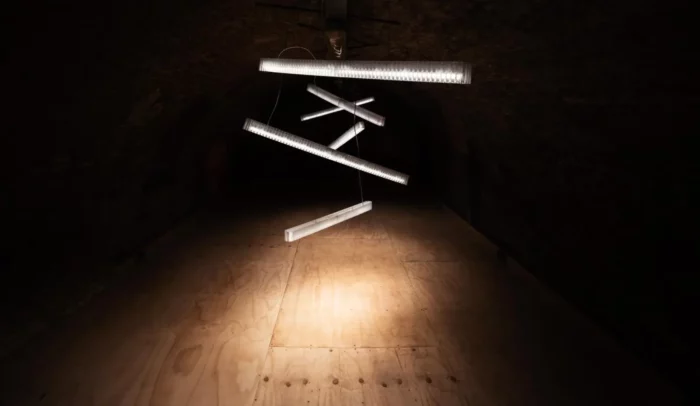
What does 3D printing mean for the future of lighting?
3D printing will not replace every traditional manufacturing method. Large-volume production and standard products will continue to have their place.
But for projects where flexibility, customisation and rapid innovation matter, additive manufacturing offers new possibilities. It makes it easier to produce customised lighting, reduce inventory and reuse materials.
The examples of Signify myCreation and IQ LUX show that 3D printing is developing from a technique mainly used for prototyping into a broader manufacturing method for lighting, with opportunities for customisation, on-demand production and circularity.
At Project Nekton, we follow these developments because they show how the lighting industry continues to evolve. Innovation and sustainability do not have to be opposites. By designing, manufacturing and using materials more intelligently, we can create lighting solutions that evolve alongside buildings and the people who use them.
The future of lighting is therefore not only about better light. It is also about designing, manufacturing and evolving more intelligently.
Curious about how innovative lighting technology can make your building more future-proof? Project Nekton is happy to explore smart lighting solutions that combine energy efficiency, comfort and flexibility. LED’s talk.
In conclusion
3D printing shows how quickly the possibilities within the lighting industry are evolving. But innovation only creates real value when it contributes to better buildings, greater comfort and a more sustainable way of working.
Curious to see what this looks like in practice? Discover how Project Nekton approached the office lighting project for Cobofisk and brought technology, energy efficiency and comfort together in one lighting solution.
Frequently asked questions
What is 3D printing in lighting?
3D printing in lighting is a manufacturing process that builds luminaires and lighting components layer by layer from a digital design, allowing greater flexibility and customisation.
What are the benefits of 3D-printed lighting?
The main benefits include greater design freedom, on-demand production, reduced inventory, shorter development cycles and opportunities to reuse materials.
Is 3D printing more sustainable than traditional lighting production?
3D printing can support a more sustainable production model through on-demand manufacturing, efficient material use, recycled materials and opportunities for repair, reuse and recycling.