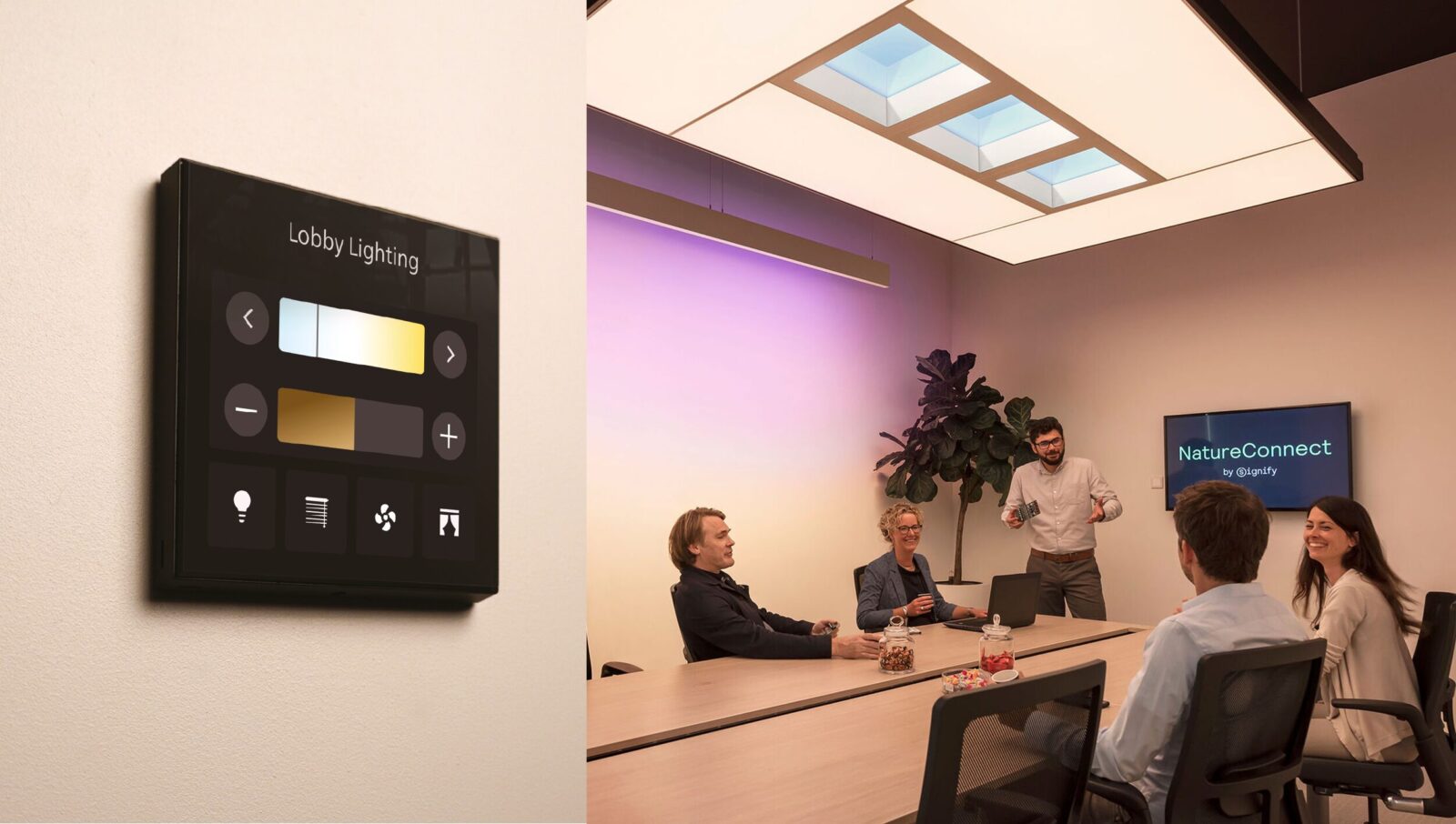
Wired vs. Wireless Lighting Control? The Right Choice Depends on Your Building
At the start of a lighting project, the same question often comes up: should we choose a wired or wireless lighting control system?
Both technologies have their advantages. Wired lighting control offers robustness, scalability and extensive integration capabilities. Wireless lighting control provides flexibility and reduces the need for additional cabling, especially in renovation projects.
But the choice doesn’t have to be black and white. Increasingly, we combine both technologies in a single smart lighting system.
Which solution works best? That depends on the building, its application and the desired functionalities.
What Is the Difference Between Wired and Wireless Lighting Control?
The main difference lies in how lighting components communicate with each other.
Wired Lighting Control: A Robust Foundation
In wired lighting control systems, control commands are transmitted through physical cables or a communication bus. A well-known example is DALI (Digital Addressable Lighting Interface), which allows lighting fixtures to be controlled individually or in groups.
Wired systems are particularly interesting when:
- Large numbers of lighting fixtures need to be managed centrally.
- Integration with a Building Management System (BMS) is required.
- Advanced features such as emergency lighting or tunable white need to be integrated.
- Reliable communication, diagnostics and long-term management are priorities.
Especially in larger or technically complex buildings, wired lighting control provides a structured infrastructure.
The downside? Control cables need to be installed. In renovation projects, this can mean additional construction work, higher installation costs and longer project timelines.
Wireless Lighting Control: Flexible and Efficient Installation
With wireless lighting control, components communicate via radio signals, using technologies such as Bluetooth Mesh, Zigbee or other wireless protocols.
This means that separate control cables to sensors and switches are not always necessary. The lighting fixtures themselves generally still require an electrical power supply.
Wireless lighting control is particularly beneficial when:
- Renovating an existing building.
- Installing new cabling is difficult or expensive.
- Room layouts change frequently.
- Installation work needs to cause minimal disruption to daily operations.
- Lighting systems are expanded in phases.
Wireless systems make adjustments easier, but they still require careful planning. Radio coverage, network capacity and compatibility all influence the reliability and scalability of the installation.
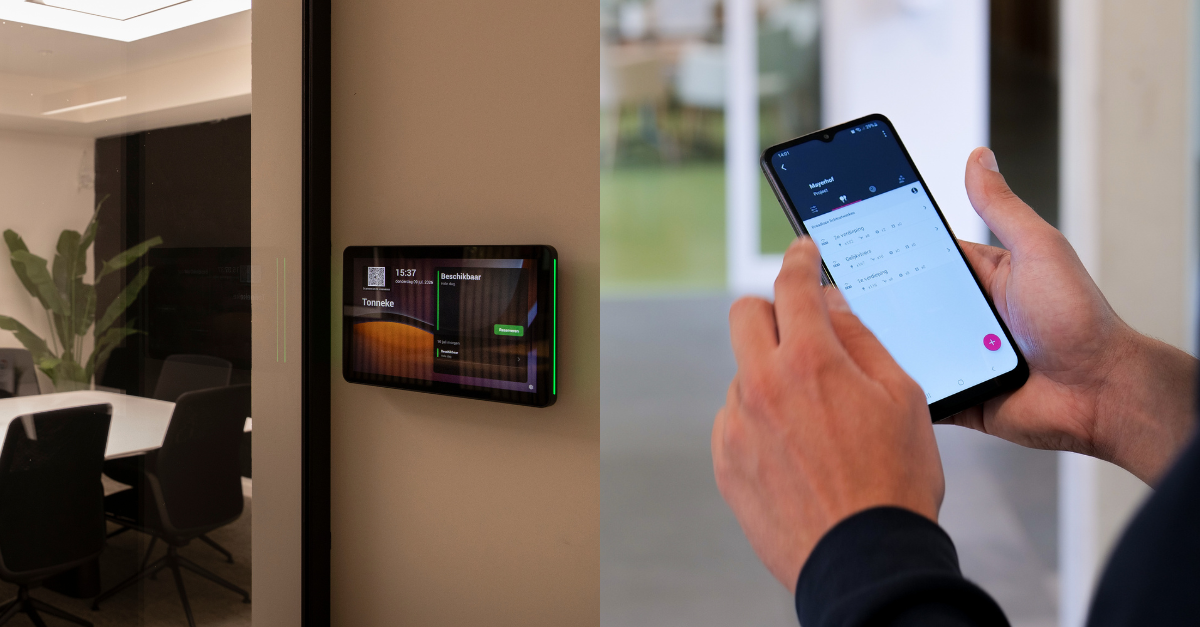
Wired vs. Wireless Lighting Control: Key Differences
| Wired | Wireless | |
|---|---|---|
| Communication. | Via control cables | Via radio signals |
| Installation | Requires more cabling | Requires fewer control cables |
| Renovations | May involve more construction work | Often faster and less disruptive |
| Flexibility | Changes may require additional cabling | Easier to reconfigure |
| Scalability | Well suited to large, complex installations | Depends on network architecture |
| Integration | Extensive BMS integration capabilities | Possible through compatible gateways |
Neither system is inherently more energy-efficient. Energy savings primarily depend on the lighting control strategies used, such as occupancy detection, daylight harvesting and dimming.
Why Choose Between Wired and Wireless When You Can Combine Both?
An interesting development in smart lighting is the rise of hybrid lighting control.
This approach combines a wired infrastructure with wireless components. For example, existing DALI lighting fixtures can be connected to wireless sensors and switches through a gateway.
This allows us to retain what already works while adding flexibility where it matters.
A practical example is Casambi Salvador. This solution allows compatible DALI drivers to be integrated into a Casambi network, enabling wireless control of existing lighting fixtures.
It creates opportunities to make existing installations smarter without replacing the entire infrastructure.
What’s more, a well-designed system can later be expanded with features such as energy monitoring, consumption analysis and integration with building management systems.
One important consideration: not every gateway or combination supports the same functionalities. Compatibility and future expansion possibilities should therefore be assessed from the design stage.
Which Lighting Control System Is Right for Your Project?
The right choice becomes clearer when we look at the specific situation.
For new buildings, wired lighting control can be an attractive option because cabling can be incorporated into the initial design. This is particularly beneficial for large buildings with extensive integration requirements.
For renovation projects, wireless lighting control is often a practical solution. By limiting additional cabling work, we can reduce installation costs, project timelines and disruption to building occupants.
For existing DALI installations, a hybrid solution can offer significant advantages. We retain usable infrastructure and add wireless functionalities where they create value.
For large, complex buildings, the decision mainly depends on the required scalability, operational reliability, integrations and long-term management needs.

Smart Lighting Control Starts with Thoughtful Design
At Project Nekton, we don’t start with a specific technology. We start with the needs of the building and its users.
We assess the existing infrastructure, identify the functionalities needed today and consider how the building may evolve in the future.
We also look beyond installation costs. Energy consumption, maintenance, flexibility and component lifespan all play an important role.
Because a future-proof lighting solution doesn’t necessarily have to be entirely new. Sometimes, the greatest value comes from making smarter use of what’s already there.
Wired, wireless or hybrid? The best solution is one that works today and can evolve with your building tomorrow.
Explore the Possibilities for Your Building
Planning to upgrade your lighting or introduce smarter controls? At Project Nekton, we’re happy to help you find a solution that fits your building, budget and future plans. LED’s talk.

Frequently Asked Questions About Wired and Wireless Lighting Control
Is Wireless Lighting Control as Reliable as Wired?
A well-designed wireless system can operate reliably. However, its performance depends on radio coverage, network architecture and the surrounding environment. Wired systems provide a predictable communication path.
Can I Make an Existing DALI Installation Wireless?
Yes. In certain configurations, gateways can connect existing DALI drivers to wireless lighting control systems. Which functionalities remain available depends on the chosen technology.
Which Lighting Control System Is the Most Energy-Efficient?
Both wired and wireless systems can reduce energy consumption through occupancy detection, daylight harvesting and dimming. The right configuration and application matter more than the communication technology itself.